


Filesalvage Serial Number Mac Computer
04.09.2019
- Using the underlying architecture of Mac OS X, FileSalvage can. Otherwise known as a serial number. Media card readers can be purchased from most computer.
- Filesalvage mac serial number Filesalvage mac serial number As acom pc lite 2.0 viewer licensee, you own the media on which the Software is originally recorded.
On this Page:. FileSalvage is an extremely powerful Macintosh application for exploring and recovering deleted files from a drive or volume.
Filesalvage mac serial number Filesalvage mac serial number If you selected Show filesalvahe Finder, a folder with the recovered files will open.
FileSalvage is designed to restore files that have:. been accidentally deleted. become unreadable due to media faults. been stored on a drive before it was re-initialized/formatted. Use FileSalvage to recover your lost files, iTunes libraries, iPhoto collections, and to rescue data that has been lost. Built for your OS X 10.12 Sierra, OS X 10.11 El Capitan, OS X 10.10 Yosemite, OS X 10.9 Mavericks, 10.8 Mountain Lion, or 10.7 Lion Apple Macintosh computer. FileSalvage cannot recover deleted files that have been overwritten by new data.
Having said this, due to the way in which data is distributed across file systems when being copied, there is often a decent chance that recently deleted files have not yet been overwritten, though there are no guarantees. FileSalvage is designed to recover files not repair them. FileSalvage can currently recover over 100 file types, embedded and standalone (see ). It will recover both computer files and RAW camera files, as it works on digital camera memory cards. In addition, FileSalvage is constantly being enhanced and updated with an increasing number of file types to salvage. For the most current list of salvageable file types, please visit our web site at: or email us.
FileSalvage also supports the ability to process disk images. This means that defense attorney’s, law enforcement and corporate agencies can now access EnCase® (unencrypted images only), MacForensicsLab, Unix DD, and CopyCatX image file systems without purchasing expensive computer forensics software. Even with its advanced features and performance, FileSalvage is extremely straightforward to handle. The easy-to-use interface is designed with any level of OS X user in mind and is highly accessible to all, with the potential completion of the whole recovery process within just a few clicks. 1: FileSalvage Features Written specifically for Mac OS X, FileSalvage includes powerful features that give the user greater control and flexibility in analyzing and retrieving lost data: Works anywhere – FileSalvage is device and file system independent. This means that the user can recover files from a hard drive, digital camera, USB key, PC disk, FLASH card and most storage media that work with the Mac. Searches free space – On HFS+ volumes, the user can limit FileSalvage to scan only the free space of a volume to recover files from.
This produces huge speed efficiency and means that the task of recovering files can be accomplished more quickly. Recovers files after a disk or device has been formatted – Own an initialized disk or device with files that you want back? So long as the drive was not securely erased, FileSalvage should be able to recover the files from the drive. FileSalvage will not be able to recover data that has been securely erased from a device or media, a process that involves overwriting the drive’s data one or more times. Most operating systems only perform a “quick format” by default and so unless the user consciously performs a secure initialization the chances of recovery are high. Recovers files from corrupt media – Data corruption does not stop FileSalvage from working.
In fact, it will happily process an entire corrupted file system for intact data, and recover whole or partial files wherever it finds them. FileSalvage works on faulty hardware – FileSalvage can also recover data from mechanically unsound devices. In addition to several tried and tested methods, SubRosaSoft has implemented additional improvements to read the same piece of information and to automatically skip of areas of the file system that are fully unreadable. By employing these methods, FileSalvage is able to recover data from sources that to other software may have appeared to be too physically broken to use.
Preview – Allows the user to preview a range of available files before choosing to recover them. Using the underlying architecture of Mac OS X, FileSalvage can read and display audio, video, image, text and other files. Recover images – FileSalvage can analyze and recover files from most third party tool disk images such as standard ISO, EnCase® (unencrypted images only), UNIX dd, Drive Genius™, SubRosaSoft CopyCatX™ and MacForeniscsLab™. Simple interface – FileSalvage has a clean and simple user interface that makes it accessible and very easy to use, whether you are a beginner or an advanced user. Contacting SubRosaSoft, Inc. Comments & Questions If you have comments, problems, or questions about this product, or if you are interested in a site license, please contact us via email:. For information regarding technical help, please refer to “Finding Help” at the end of Chapter 2.
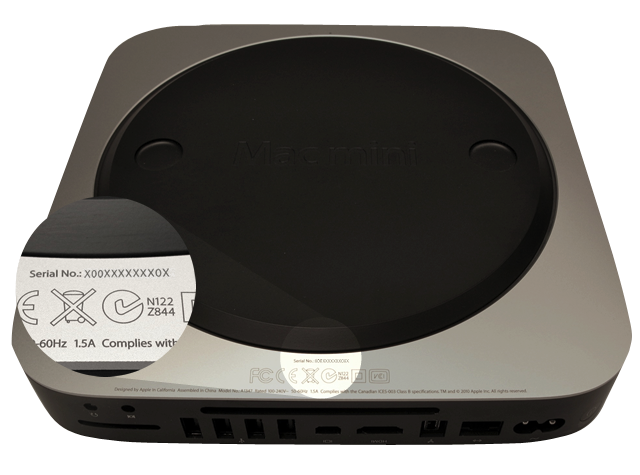
2: Getting Started – The Basics of FileSalvage System Requirements FileSalvage is programmed to run on the following minimum specification:. Apple Power Macintosh CPU (Intel based). Mac OS X (10.7 or higher). At least 2 GB of RAM (more is better). Secondary Hard Disk Registration Number Each user is required to have a registration number, otherwise known as a serial number, in order to complete the full version installation of the software properly.
Online Purchase When purchasing the software online at: the registration number is automatically emailed as part of the purchase confirmation. If a confirmation email is not received, please ensure that it has not mistakenly been placed in the email client’s junk folder before requesting technical support. Having received the email, please make a print out and store this in a safe and secure place for future reference. Retail Purchase If the software was purchased through a retail channel, the registration number should be inside the tin case on top of the CD. Please be sure to keep these details in a safe and secure place.
No Registration Number – Trial Mode Without a registration number, FileSalvage runs with limited functionality. In Trial Mode, the user will be able to scan for files, but will be unable to recover them.
For full recovery functionality, the user must register his or her version of FileSalvage. To do this, purchase the software online from www.subrosasoft.com or via a retail channel, then simply select “Enter License Key” from the FileSalvage drop menu, and enter a valid registration number. An alternative way to register the product is to click on the serial number link on your serial number email. Updates and Upgrades A single registration number is valid for incremental updates to the purchased version of FileSalvage. When upgrading between versions the purchase of a new registration number will be required. For information on upgrades, please email.
Lost Registration Numbers Please ensure that you keep your registration number in a safe and secure place. Print off confirmation emails, or back them up.
SubRosaSoft, Inc. Cannot guarantee the ability to re-issue serial numbers for our users.
Site Licenses Site Licences can be purchased online via. For volume discounts please contact us directly via email:. Obtaining the Latest Version Downloading from the Web Site It is a must for any user to ensure that they have the latest version of the FileSalvage software.
The latest version is always freely available for download on our web site at: A download link, alongside version information, is accessible on the product page of the site. Simply click the respective link and a compressed archive file will automatically begin to download to the desktop, or another specified download location. FileSalvage versions are distributed in a ZIP archive format and can be decompressed in the Mac OS Finder with a simple double-click of file icon. This will place the decompressed disk image document in the same location as the original ZIP archive, most likely the desktop or your downloads folder.
Having decompressed the disk image file, the user can then double-click on it to mount the disk image on the Desktop. Within the disk image the user will find the FileSalvage application and the latest Read Me document. We strongly recommend the FileSalvage application be moved to the Applications folder and the original ZIP archive file be placed in the Trash for deletion. Installing & Updating FileSalvage Prior to the first time running a scan with FileSalvage, the user should ensure that he or she has logged into OSX with PRIMARY ACCOUNT administrative capabilities. When preparing to install the necessary files, FileSalvage will prompt the user for the admin password of the primary administrative account.
If a valid password is not entered, the installation will be unable to proceed and FileSalvage will quit when Cancel is clicked. Installing or Updating via Download Once the software has been downloaded from the site and decompressed, the user should simply drag & drop FileSalvage from the mounted disk image into the Applications folder, or to the previously selected desired location. If prompted to replace the existing version of the file, click Replace. When updating to the latest version, the user may be prompted with an install dialog window after application start-up.
If so, click the Install button and proceed as usual. Initial Setup Prior to the first time you run a scan, a password will be requested. Once correctly entered, the software will be ready for scanning and recovery of files. The password is your administrator password, and not one assigned by us. If you don’t have a password, you will need to assign one to the system before using FileSalvage.
Finding Help & Technical Support Should the user need assistance whilst working with FileSalvage there are a number of sources through which to get help: Help within FileSalvage To get help with any questions you may have about the operation of FileSalvage, select’FileSalvage Help’ from the drop-down Help menu. Technical Support Our technical support is free via email and can be accessed at the following address:.
The support hours are 10am to 6pm Pacific Standard Time Monday through Friday (GMT -8). In addition to any support question(s), the user must include ALL of the following pieces of information:. Valid registration number. System configuration(s) – hard drive make, model etc. System OS version. System related information can be found by using the “System Profiler” application in the /Applications/Utilities folder.
3: Using FileSalvage – Understanding the Core Functions The Main Window – An Overview Immediately after start-up, the user will be taken to the ‘Main Window’. The Main Window is the starting point for performing any task. Menu Items There are a few items on the menu bar that are specific for FileSalvage: Enter License Key Selecting Enter License Key will display a window for entering the Registration number (if the software is running in Trial mode).
The menu will be disabled if a serial number has already been entered FileSalvage Help Selecting FileSalvage Help will launch the default browser on the user’s machine and access SubRosaSoft.com for FileSalvage’s html based help file The Main Window’s Layout The layout of the window is effectively divided into 4 sections:. The Source pane. The Scan Options panel. The Found pane.
The Preview pane. Source pane This part of the window contains the devices and volumes attached to the machine. From this panel, a user can select a device or a volume to scan and recover files. Scan Options + Buttons panel This is the portion of the window that contains the scan options. When performing a drive scan, the user has 2 settings to consider:. Deleted files only or Entire device.
Speed of scan Search for deleted files only – In order to speed up the process of scanning a device for recoverable files, the user can search through only unallocated blocks of data containing erased files. Search for regular and deleted files will search for all files, deleted or not.
Search for Embedded Files – Formerly Slow Scan. Sometimes there are files that are contained within files, such as in web caches or mbox format email folders. Checking this option causes FileSalvage to find such files, though a side effect of this is that the scanning procedure is slowed down. Found pane This part of the window is where the initial scan results will appear once the user has completed the initial scan. The results are displayed in the pane, grouped by file types, making it easier to salvage specific kind of files To select a file or multiple files to recover, simply scroll up or down the list, and highlight the file or Command + Mouse Click Item to select multiple files. To include all files found, simply select all of them by entering Command + ‘a’ Once you have selected the file(s) for recovery, you can proceed to recovering the files by click on Recover. Preview pane This part of the window allows the user to preview a range of different file types simply by selecting the respective file in the Found pane.
To select a file to preview, simply scroll and locate the item of interest from the list, and click on the file. Seconds later, a preview of the file will be displayed. For safety reasons, FileSalvage will not allow the preview of files bigger than 30 MB. The Recovery Process The recovery process is a simple 2-step procedure:. Gather a list of available files. Recover the files to a location of your choice Step one of the process is easy enough to understand.
With FileSalvage simply gathering a list of available data. However, it is important to understand on the secondary step that when a user is recovering data from a device or volume, he or she should NOT save the recovered data back to the same location.
The answer is simple enough, but does not necessarily occur to a lot of people. When recovering data and saving to the same location, the device will not stop to think whether it is overwriting “free space” or not. That is to say that it will happily overwrite data to blocks of the hard drive that it knows are not allocated with files. Therefore, when the user is recovering files he or she could easily overwrite the very blocks of data that contain data marked for recovery. What’s the solution to this? Well the solution is either to use another partition on the same device or to have a secondary device such as an external USB hard drive to write the recovered files to.
When recovering files the user must also be sure to have an equal amount of free space to recover to, running out of space will cause an error message and halt the recovery process, thus forcing the user to start the process all over again. That said, SubRosaSoft understands not everyone has a second drive handy. In an emergency situation, FileSalvage version 9 allows the user to recover the data back to the same drive it is recovering from. The user will receive an alert warning the consequence of writing data to the drive FileSalvage is trying to recover from. When attempting to recover any number of files, the user should always be certain that he or she has enough available recovery space. Attempting to recover a file such as a 300mb video file will require the exact same amount of space on the recovery device. Selecting volume or device to scan and recover files To select a device or a volume to scan and recover files, simply scroll up or down the Source pane, and highlight the device or volume Once you have selected the device or volume to scan for files, you can proceed to the next step of selecting the scan options.
Selecting scan options The user has 2 settings to consider:. Search for deleted files only or Search for all (deleted of regular) files. Speed versus granularity (embedded data) of scan. Search for deleted files or Search for deleted of regular files – The user can search through only ‘unallocated’ blocks of data (or free space) containing deleted files, or the entire device for all files, deleted or not. Search for embedded files – When unchecked, FileSalvage will scan the volume or device using a block-by-block format, which runs a few times faster than the byte-by-byte embedded files scan. However, sometimes there are files that are contained within files, such as in terms of web caches or mbox format email folders.
Checking this option causes FileSalvage to find such files. Scanning for Files to Recover Having selected the file types for scanning, the user is now ready to proceed with the file-gathering step of the salvage process.
To get the scan started, the user should simply click the Start Scan button on the bottom left-hand corner of the main window. This will bring a progress bar close to the bottom of the window, and provide the user with live update statistics regarding the number of files and any bad blocks found. To help speed up the scan procedure, the user should make sure that the ‘Scan for deleted files only’ option is checked. This will force FileSalvage to only scan portions of the drive that have not been allocated within the file catalog. When completed the user will be presented with a dialog box confirming the completion of the scanning process with the final statistics of the number of files located and the number of bad blocks. He or she should close this by clicking on OK, at which point the user can review the results of the scan in the ‘Found’ pane of the window.
To the right of each file type in the result set is a disclosure triangle, when clicked this will display an expanded list of files available for preview and salvage. Previewing Scan Results Having generated a set of results. The user can preview a range of different file types simply by selecting the respective file in the results pane and then viewing matches in the preview window. Recovering Files Having scanned, reviewed, and previewed the available data, the user can finally select and salvage the desired files, one by one. To do so, he or she must select each individual line item in the results pane. Rather than scan and recover files on an individual basis, it is possible for the user to select multiple files, either using the Command + A to “Select All” items or using Command + Mouse Click Item to select items randomly and selectively.
Once selected, the user has just to click the Recover button at the bottom of the results pane. This will return a “Save” dialog box from which the user should select an external location to which to save the data and then click Save. Once the files are salvaged, a dialog will pop up to announce the process is completed. Click OK to continue, or click Show in Finder to display the recovered files. If you selected Show in Finder, a folder with the recovered files will open. To be certain that the recovery of files does not overwrite the potential data source, FileSalvage will alert the user to save ALL recovered data to a completely separate media source. This ensures that the user does not overwrite data available for recovery.
4: Appendices A – Question and Answers Where is the documentation for FileSalvage? You are reading it now. If you need help while you are using the software, you can access the help file from the Help menu.
I need support help, what should I do? Our technical support is free and can be accessed by e-mail (Our e-mail support hours are 10 am to 6 pm Monday through Friday, California time). You must include in the e-mail your serial number, system configurations, and the system software version. I don’t have a password for my system. Can I still install the software? Without the password (or if the password is “blank”), FileSalvage will not be able to initialize key components to start the scan for lost files.
How come FileSalvage cannot recover file names and folder structures? The file names will not be included as they are not actually stored in the file but rather in the system’s catalog/b-trees. Minutes after the file is deleted, the information will be removed and the space recycled and overwritten. FileSalvage will recover your files to the folder of your choice but the specific folders they were in and placement will not be the same. This once again is because that information is contained in the system’s catalog/b-trees. My drive doesn’t show up under FileSalvage, what can I do to get FileSalvage to recognize the drive?
It could be possible that your drive is malfunctioning to the point where your computer is not able to talk to it at all, in which case even the device name will not appear. You might try the following things: double-check the drive cables and power source; unplug and attach the drive, or power down and restart your drive and computer. If the drive fails to show up, you could, as a last resort, try mounting the drive into an external enclosure and see if the computer will detect it. How come some files cannot be recovered properly?
Usually the bigger the files, the tougher for FileSalvage to recover. Normally, at a bigger size, a file may be fragmented.
(Fragmentation occurs when the operating system breaks the file into pieces as it writes the data over the disc platter). This is especially true when the drive is getting filled up. It will have lots of small open spaces, but few large ones. The OS has to split up the file to fit into the open spaces. Can FileSalvage work on the same disk as the boot drive? Yes, you can run FileSalvage on any locally connected drive. However, the destination folder to recover the files to should not be on the same volume you trying to recover the files from.
While FileSalvage 9 permits saving recovered files to the same disk it is working to recover, please do so only in emergency situations (e.g. When a second disk is unavailable.) FileSalvage cannot see my iPod, iTunes can. What is wrong? In order for FileSalvage to detect the iPod, the iPod will need to have Disk Use enabled. For information on how to enable disk use on your iPod please refer to this page “Using your iPod as a storage drive.” FileSalvage does not support iOS based iPods, iPhones, and iPads.
FileSalvage located my songs but cannot play. If some of your songs are purchased (encrypted songs), you will need to authenticate the destination using iTunes. Once this has been completed, the destination computer will be able to play the songs normally. My camera card won’t show up, is the card defective? Sometimes the flash card from your camera will not appear on the desktop or in FileSalvage. If this is the case, you may need to connect the media card via a media card reader. Although a lot of cameras (like the Canon SD series and the Nikon COOLPIX) can be connected to your Mac via USB cable to download your pictures, there are sometimes issues that prevent a damaged camera memory card from being recognized by your Mac.
Using a USB memory card reader often solves this problem, and allows the card to be read by your Mac so that you may recover your pictures from the damaged card using FileSalvage. Media card readers can be purchased from most computer electronics stores (for under $20), and most read and write to a large number of supported card formats.
Product Description Use FileSalvage’s powerful data recovery features to find and recover deleted files from any drive or volume a Macintosh can access. FileSalvage is designed to restore files that have:. been accidentally deleted. become unreadable due to media faults. been stored on a drive before it was re-initialized/formatted. Use FileSalvage to recover your lost files, music libraries, iPhoto collections, and to rescue data that has been lost.
Updated to support macOS Sierra (supports Mac OS X 10.7 and higher). Available ONLY by Download! FileSalvage cannot recover deleted files that have been overwritten by new data. Having said this, due to the way in which data is distributed across file systems when being copied, there is often a decent chance that recently deleted files have not yet been overwritten, though there are no guarantees.
FileSalvage is designed to recover files not repair them. FileSalvage can currently recover over 100 file types, embedded and stand-alone (see ). It will recover both computer files and RAW camera files, as it works on digital camera memory cards. In addition, FileSalvage is constantly being enhanced and updated with an increasing number of file types to salvage. FileSalvage also supports the ability to process disk images. This means that defense attorneys, law enforcement and corporate agencies can now access Unix DD, Apple DMG, and CopyCatX image file systems without purchasing expensive computer forensics software. With its advanced features and performance, the easy-to-use interface was designed with every level of OS X user in mind and is highly accessible to all, with the potential completion of the whole recovery process within just a few clicks.
We will need the manufacturer, serial #, detailed description of part needed, etc and we will do the research and get back with you promptly. Dynaclave 613r manualidades. If you need something not listed, either call or us. Dynaclave 613R (576A) Medical Center Supply Below we have listed the most common, easily replaced parts for each model; Unlike our fellow parts sellers, we have available almost all parts, from the most obscure washer and packing nut, for the major manufacturers.
FileSalvage Features Written specifically for Mac OS X, FileSalvage includes powerful features that give the user greater control and flexibility in analyzing and retrieving lost data: Works anywhere – FileSalvage is device and file system independent. This means that the user can recover files from a hard drive, digital camera, USB key, PC disk, FLASH card, scratched CD, and most storage media that work with the Mac.
Recovers files after a disk or device has been formatted – Own an initialized disk or other device with files that you want back? So long as the drive was not securely initialized, FileSalvage should be able to recover the files from the drive.
FileSalvage will not be able to recover data that has been securely erased from a device or media, a process that involves overwriting the drive’s data several times. Most operating systems only perform a “quick format” by default. So unless the user consciously performed a secure initialization, the chances of recovery are high. Recovers files from corrupt media – Data corruption does not stop FileSalvage from working. In fact it will happily process an entire corrupted file system for intact data and recover whole or partial files wherever it finds them.
Find Mac With Serial Number
FileSalvage works on faulty hardware – FileSalvage can also recover data from mechanically unsound devices. In addition to several tried and tested methods, SubRosaSoft has implemented additional improvements to read the same piece of information and to automatically skip of areas of the file system that are fully unreadable.
By employing these methods, FileSalvage is able to recover data from sources that may have appeared to other software to be too physically broken to use. Searches for deleted files only – On HFS+ volumes, the user can limit FileSalvage to scan only the free space of a volume to recover files from.
Serial Number Mac Computer
This produces huge speed efficiency and means that the task of recovering files can be accomplished much quicker. Preview – Allows the user to preview a range of available files before choosing to recover them. Using the underlying architecture of Mac OS X, FileSalvage can read and display audio, video, image, text, pdf, and other files.
Recover images – FileSalvage can analyze and recover files from most third party tool disk images such as standard ISO, EnCase® (when converted to dd image), UNIX dd, Drive Genius™, SubRosaSoft CopyCatX™, and SubRosaSoft MacForensicsLab™. Simple interface – FileSalvage has a clean and simple user interface that makes it accessible and very easy to use, whether you are a beginner or an advanced user.
FileSalvage is fantastic! A compact flash card containing hundreds of pictures was accidently erased and I was desperate to find a way to reclaim the images. A web-search led me to your product. I downloaded it and, without even bothering to read any directions, launched, searched and retrieved every single image in a matter of minutes. In less than half an hour I’d deleted my photos, found your product, downloaded and utilized it, and was back to work.
With this type of ease of recovery, I’m likely to not even learn from my mistake of erasing in the first place! I was also impressed that the software was fully compatible with Apple’s newest OS- I was initially concerned that I may be “between versions” since Tiger was recently released, but there were no problems. Intuitive, quick and effective- perfect product for the job. On July 14, I suffered a major primary hard drive failure. This happened immediately before my next daily backup and I stood to lose some 400 photographs and several other critical files created the day before.
To add salt to my wounds, when able to briefly access the ailing disk, I discovered it had also been over-written in error by one of my own back-up programs! How this could have occurred I will never know! Not unnaturally, I assumed I stood zero chance of data recovery and a trial of a few shareware utilities did nothing but reinforce that view.
Then I found FileSalvage and was able to recover every important missing file in one simple scan. I would like to express my sincere thanks to SubRosa for such an excellent piece of software and for saving the day for me! Apple engineers replaced my failed primary drive today, however it was not until they had gone that I realised my e-mail program had still been writing to the failed drive. As a result I have lost my most recent e-mails, including the serial number you kindly sent me on July 19. Could you possibly send my registration information again?
My thanks in advance, BRIAN D. I can’t believe how fantastic the FileSalvage program worked!
I thought I’d lost all my photos, but I recovered 95%+ of them. I feel like a complete Wally, as I lost the photos in the process of backing up onto my new external hardrive. I re-partitioned the drive on my Powerbook, thinking that I’d backed-up on to the external, when I found only empty folders (I didn’t verify). So I had to recover from the re-partitioned drive. I think the trick is once you’ve discovered the mistake, don’t interact with the computer until you’re ready to do the recovery. Thanks for the great software. Greetings, I would like to share my initial thoughts with you on first usage of File Salvage.
Mac Serial Number Lookup
I plugged my La Cie external disk into my computer through my friend’s Seagate (very plastic cased) external drive to copy about 25 GB from the Seagate to mine. The connection was firewire 400. After the transfer I tried to ‘eject’ the Seagate, then my La Cie – well – the partition on my La Cie that received the transfered files somehow lost its address data – in other words, that partition suddenly didn’t exist. I’d lost about 60GB of very important info.
I quickly bought Disk Warrior, which didn’t do a thing – then I bought Tech Tool Pro 4 (in the same day!) and nothing still. This was becoming expensive. I had almost given up when I remembered that I had bought File Utilities from your company one or two years ago.
I went to your website and downloaded trial versions of FileSalvage and VolumeWorks to see if either could help. FileSalvage immediately recovered almost half of the data – albeit without the original name of the files but who’s complaining? I returned to your website and bought the full version and have run it twice and recovered over 8000 files. Thanks for rescuing me from the depths of despair! It’ll take a while to rename and sort out most of those files but they do exist now. Many many thanks and best wishes, Johnny Keggler for FileSalvage.
It’s been a long time since I had to use file recovery software, the last was somewhere back in OS 9 days. Being a well seasoned user user I’m not supposed to make dumb mistakes, like the one yesterday when I got triggered happy clipping along at break neck pace and with one key tap too many erased 3 days of programming in Xcode. And I also hadn’t backed up for 3 days, dumb move number 2. I just sat and stared at the screen, knowing the drill, don’t do anything else, don’t even think at this point. Since Norton is bygone days, I had to spend a couple hours road testing what’s out there. I’m pleased to say that SubRosaSoft’s FileSalvage is the only trial app that worked. The others were questionable, if not even accessible for demos, and one was a port from some other world that said my drive was destroyed (they got a nasty email for lying).
When I saw the critical file types and could even look at my code, I knew I had the right tool. Very impressive, thanks very much for providing what customers need before they leap into the unkown. Okay, thanks for the magic! More than a year ago, my wife had typed an 11-page family history onto my 12-year-old son’s laptop computer. Over the course of a year, he had changed user permissions, updated the system, added and subtracted files, programs, documents, etc. And the file had disappeared. We tried everything to retrieve the file, including other retrieval software, the technicians at the Apple Genius Bar, and my brother, a computer security specialist.
Everyone told us that at this late date, the file was beyond recovery. And that’s where it stood until I saw your ad in MacAddict. I bought OfficeSalvage last night and tried it this morning. Your software found ALL 11 PAGES, intact! My wife’s birthday is next week, and this will undoubtably be the best present we will give her. Thanks again. My computer decided, once we were pages away from finishing a 100-page screenplay that was due in three days, to dispose of the only file in the world I cared about.
I consulted AppleCare and all the computer people I know. The script was gone and I was sweating in that bad way. As a last resort, the AppleCare guy recommended I try FileSalvage, but could make no promises. I read all the reviews I could find, as 80 bucks seemed like a gamble on a program no one could truly vouch for.
But, we made the leap of faith and FileSalvage found over 600 Final Draft documents. It was a task sifting through 600 files to find 10, but I’ve never so willingly sifted. I think we may have lost around 5% of the original file, but that remaining 95% never looked so good.
Throughout the recovery process, I had questions and Mark at SRS Support was helpful every step of the way, responding to my emails long after normal business hours. I couldn’t say if the program will work as well for everyone’s file losses, but it sure did save us.
RE: FileSalvage 5. This software’s ‘undelete’ feature really works! During a backup of a critical time sensitive document (that we’d been working on for 2 years) it did not backup because the document was up and being worked on when the scheduled backup took place (meaning the actively being worked on document won’t back up). Before the next scheduled backup the employee working on the document deleted (trashed) it. After doing a thorough search of the web on reviews of document recovery software, yours appeared to be the most dependable, especially concerning undeleting of trashed documents. Purchased the software and that evening did the undelete command and the next morning went into the renamed saved files and viola!
There it was, a complete, unaltered and current document that loaded up on the first try. Very impressive, especially since this was a very complicated multi megabyte Freehand MX Master Page document (containing 60 pages). Thank you so much for an excellent and very easy to use software program. The $100 I paid for this software saved me thousands of dollars in actual wages and resources and salvaged an important shipping deadline for two multi thousands of dollars product orders and meeting the schedule for getting label samples to a new distributor taking on our products next month. I have been meaning to drop you a line but never seem to find the time. Your recent email has prompted me. I purchased your software, File Salvage, after I had already spent over $200.00 on applications to find lost pic’s from other software vendors.
Let me tell you.FILE SALVAGE is FANTASTIC!!! It worked and it worked flawlessly.
I can’t begin to tell you how great this program really is. It was and is a joy to use. The photo’s that were recovered with your software were of great value to me. None of the other three app’s even came close to the performance of File Salvage.
I thank you for a fine job. My good friend was visiting from Chicago and we’d spent the entire day shooting in Muir Woods and the Marin Headlands. We’d gotten some spectacular shots of the redwoods, the San Francisco Bay, and the city skyline.
Unfortunately, my Mac or my card reader decided to be crabby that day — nothing could read the files, not even the Finder (-36 error). I put the card back into my d200 and now IT couldn’t read them either (“Card is Empty”)! I tried the Disk Utility program and after it “fixed” my volume, the files were still unreadable and now they were all zero k instead of 15MB!
I gave up in frustration and formatted the card with my d200 and just resigned myself to shoot again another day. I’d shot another 20 or so images onto my card when a buddy in Aperture QA told me that i could likely still recover some of my lost files. I didn’t really believe him, but i thought i’d try anyway I bought CameraSalvage online, downloaded it, and about 20 minutes later i opened the Salvaged Photos folder and staring back at me were all my lost shots — even after DiskUtility mangled my card, even after i’d formatted it, and even after i’d begun shooting “over the top” of them.
I was beside myself. Not only had I “gotten back” a lost day of shooting and car rental, I’d gotten back my memories of a great day with an old friend. You guys rock! Dear SubRosaSoft!
I want to marry you! I bought and downloaded your CameraSalvage software for $39.95 and recovered 330 photos and 13 movies from my SanDisk that I had accidently and foolishly ‘formatted’. I did this after a very knowledgeable Lab in CO told me the disk was not salvageable!!
If it was salvageable, their rates ranged from $75-150. I took a chance and downloaded your software. Following clear-cut directions I was able to retrieve EVERYTHING in original condition. I’m still in shock.
THANK YOU so much for producing such a great product and for providing it at a reasonable price! I will certainly sing your praises to anyone and everyone who will listen!!!!! Thanks again, Jaika Klein.