


Bossy Verbs Game Ks101
02.10.2019
Verb Primary Resources, verbs, noun, adjective, wow. A literacy game where you need to identify the verbs and adverbs. You will also need to fill in the missing words. You may want to make a list of all the verbs your students find and review their definitions, especially cooking specific verbs. Play a game of Simon Says.
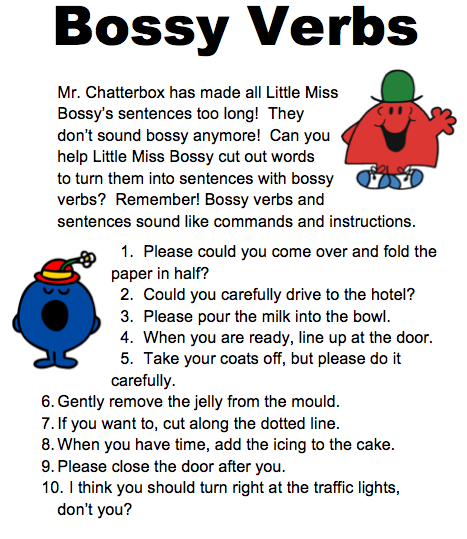
A fun action game for children to play when learning about bossy or imperative verbs. This game helps with the understanding of how, when and why imperative verbs are used by getting children to follow simple instructions or commands. Game play instructions are also included. A dice and counters are required.
Printable Classroom Activities and Games by Teacher's Pet. Primary school resources, including premium downloadable, printable classroom activities and games. Resources for Early Years (EYFS), KS1 and KS2 including challenge cards, board games, CVC, VCOP, stickers, posters, wordmats, signs, roleplay activities and much much more!
A sparklebox alternative! - verbs, imperative, bossy, bats, part of speech.
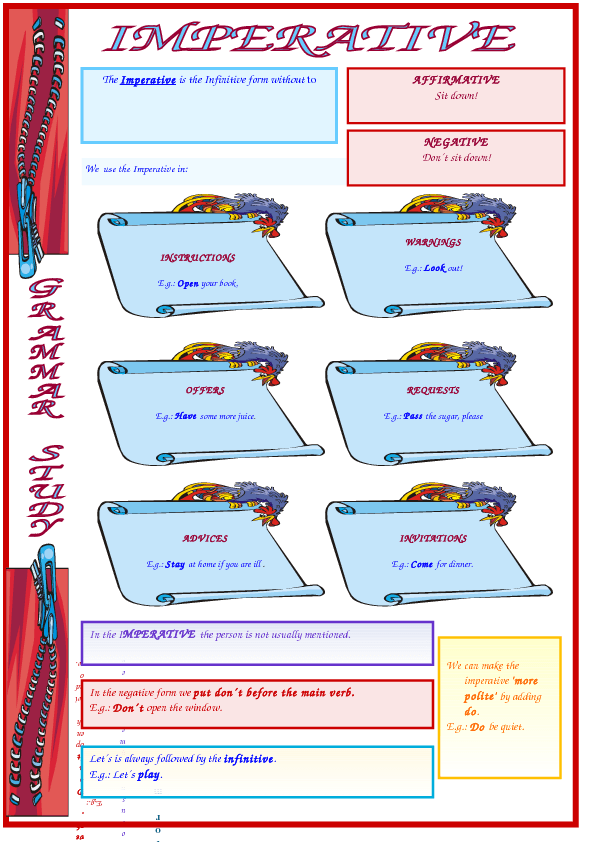
The imperative is probably best considered a rather than a tense in English, since it does not signal when any given action is performed. But even though it is not a tense in the traditional sense of the word for ESL students, understanding the imperative is important.
They will encounter the imperative in English when giving or receiving instructions, commands or calls to action. When, your students will also need to use and/or understand the imperative. Here are some fun ways you can bring the imperative into your classroom that are creative, too. Have fun with the mood and you will find that your students and you will be in a good one.
Try These 8 Interactive Classroom Activities for Using the Imperative. 1 Read Recipes Recipes are a great example of the imperative mood in authentic English text.
The step-by-step directions for creating a culinary masterpiece, or at least lunch, are written in the imperative. In the case with recipes, the writer is giving a set of instructions to the reader with the hope that the reader will be able to reproduce the same results in his or her kitchen. Start your imperative cooking lesson by giving your students some recipes to look over.
You will want to match the complexity and content of the recipe to your students’ language level. Copies from cookbooks or printouts online are great, but do not overlook simple instructions that come with a food product, like cooking directions on how to make pasta or rice. Point out to your students that the instructions in the recipe use the imperative mood and that the verbs take the second person present conjugation on a sample recipe. Then have your students find examples of imperative verbs in their own recipes. You may want to make a list of all the verbs your students find and review their definitions, especially cooking specific verbs, as a class. 2 Follow Recipes If you have the classroom resources, or your students have adequate resources at home, give them a to follow. If possible, have the ingredients for a no-cook recipe on hand, and have your students follow the directions in class.
Has tons of great ideas for no-cook recipes from the very simple to the very complex! Either individually or with a partner, have your students follow the directions for the culinary delight.
(Be aware of any allergies your students may have and plan accordingly.) If your students follow their directions correctly, they should end up with something that looks very similar to the finished product shown in the recipe, and it should taste good, too. Celebrate your students’ accomplishments by having a social time and sharing each group’s creation! 3 Write Your Own Now that your students have followed directions given to them in the imperative, have them write their own imperative instructions for making a favorite food. Ask your students to for an item that they know how to cook.

It might be a dish from their or something local and more familiar to everyone in class. Even can do this activity though they may not actually know how to cook. Their instructions will be charming and even funny and might be worth posting on a bulletin board in class. 4 Do Your Own Cooking Demo Besides written recipes, many cooking demonstrations use the imperative to communicate with their viewers how to make a particular dish. There are hundreds of cooking demos available on YouTube, so choose one that your students may like and show it to the class. Point out that as the actor/chef makes the recipe, he or she is giving instructions with the imperative mood to the viewer. Watch the video again and challenge your students to make note of any imperative verbs the chef uses.
Follow by having your students do their own cooking demo in front of the class. You can request a serious tone and perhaps even ask your students to bring the food in and make the dish in class.
Alternately, you may want your students to take a lighthearted approach and demonstrate how to make a fictional dish with real or fictional ingredients they might find in the classroom. Either way, your students will be putting the imperative to good use as they speak in front of your class. For fun, end your lesson with one or more videos of the famous Muppet the Swedish Chef. His comical kitchen exploits will elicit laughter no matter what native language your students speak! 6 Build Something Another great option for following directions is putting together a model. Kits are great, containing complete sets of instructions and materials, but they can be expensive. As an alternative, try supplying your class with a collection of building blocks and give them a set of directions for building various items.
You can find thousands of directions on. Have your students choose the item they would like to build or just make a few sets of directions available in class and let them get to their constructions.
Your students will have fun with their building block creations, and they will not even realize they are practicing the imperative in the process! 7 Tell Me How Your students will also need to use and understand the imperative mood when giving advice. Give your class a chance to share about something they are good at and give advice to classmates who might be trying that activity for the first time. Give each person five minutes in front of the class to explain how to do something that they know how to do. It may be something recreational like skateboarding or something professional like examining a specimen under a microscope or even something silly like how to become a superhero. Ask each person to give advice to a person who may just be starting out learning the activity.
What should he do? What should he not do?
Allow your students to ask questions after each presentation. 8 Give Advice Advice giving can be creative, too.
Ks101 Key
Role play a call in radio show where the host gives advice to the caller. To set the scene, show your students a small clip from the television show Frasier. Then recreate the scene in your classroom. Instead of showing the whole clip, you could show part of the television clip where the caller presents his problem, and then pause the video. Ask your students to offer advice using the imperative. Take several answers from your students before playing the rest of the clip and seeing what Frasier actually says. The next time you bring the imperative into your classroom, think about what interests your students.
Helping Verbs Game
Once you have found that, look online for instructions or directions or make some yourself for an activity related to that interest. Your students will have fun engaging in the activities and you will get the satisfaction of a lesson well taught.
What topics have you used to teach your students the imperative?