


Bagua Circle Walking Pdf To Excel
05.09.2019
Order copies of the Pa Kua Chang Journal, watch baguazhang videos. The Circle Walk Practice of Ba Gua Zhang The Circle Walking Method. Bagua Circle Walking is the primary practice of the Bagua Monastic tradition. By Walking the Bagua Circle you rotate your body into the center of the circle and.
The Circle Walk Practice of Ba Gua Zhang The Circle Walking Method Practitioners who have studied Ba Gua Zhang for any length of time are no doubt very familiar with Ba Gua Zhang's circle walking practice. Walking the circle is the cornerstone of the art, all systems of Ba Gua Zhang practice this method and thus 'walking in a circle' has become Ba Gua Zhang's trademark. However, even though the circle walking practice is common to all major systems, a student who has studied the art from a variety of different teachers can quickly become frustrated when trying to investigate exactly how the circle walking practice is performed. Ba Gua Zhang instructor Li Zi ming (1900 - 1992) of Beijing, China, holds the 'Millstone' posture.
This is the basic circle walking arm position. There are at least a dozen dif ferent circle walk stepping techniques and each teacher seems to have his or her own detailed criteria for practicing these techniques. Investigating the art of circle walking, one may run across some of the following: the lion step, the dragon step, the chicken step, the tiger step, the snake step, the crane step, the rippling step, the mud walking step, the shake step, the stomp step, the hesitation step, the continuous step, the sliding step, the digging heel step, the gliding step, and even steps such as the camel step and the elephant step.
Some of these are different names describing the same step and others are steps used only for specific leg strength and body training. One will also encounter Ba Gua Zhang schools who walk the circle painstakingly slow and others who walk very fast.
Then one may also encounter the lower, middle, and upper 'basin' walking positions along with a wide variety of upper body postures one might assume while walking. Additionally, there are various sizes and combinations of circles as well as different ground surfaces and apparatus (such as bricks, poles, or stones) that the practitioner will walk on. To the beginning student who simply wants to know how to walk the circle and why circle walking is important, all of this may seem very confusing.
Xie Pei Qi, a Yin Style Ba Gua instructor in Beijing, China, walks the circle in the 'lower basin' position. The truth is that the circle walking technique will vary depending upon the result one intends to derive from the practice.
There is no one 'correct' method. Every school of Ba Gua which is teaching a complete art will have a wide variety of circle walking methods which they practice and each method will be designed for a specific training purpose.
Cheng You Xin's son, Cheng De Liang, walks the circle holding the 'Embracing Moon at Chest' posture. This posture is one of the eight nei gong palms in both the Cheng Ting Hua and Liang Zhen Pu styles of Ba Gua. While Ba Gua Zhang practitioners will sometimes argue about the 'correct' circle walking technique, the fact of the matter is that there is not one 'correct' way to practice this exercise. Those that believe that there is only one way to walk the circle have only been introduced to a very small portion of a vast art form. The incompleteness of their training leads to ignorance. There are, in fact, many valid techniques utilized in circle walk practice, the technique used depends on the results desired.
We want to tap into all of this information to make you a more educated player when using the deck of your choice. Le llaman guerrero juan carlos alvarado fuego. This will query the site to find the Master Deck and all other user-created decks that may have pertinent information and guides on your deck. So we’re going to want to go to the page. You’re going to want to select the cards in your deck and then click “SEARCH”.
The primary guidelines in practice involve maintaining a relaxed, comfortable posture and focused intention while walking. If these guidelines are followed, variations on the theme are endless. © Copyright 2007-2018 High View Publications and B&R Endeavors, LLC. All rights reserved. Please feel free to or check out our site. Pa kua chang, also known as baguazhang, literally means 'eight trigram palm' and is an internal martial art attributed to Dong Haichuan in early 19th century China.
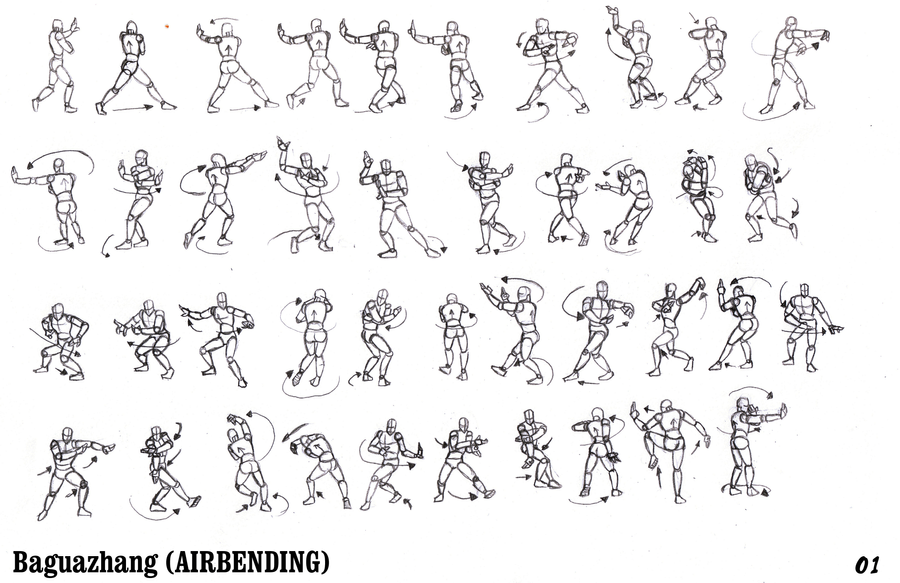
Baguazhang has its roots in Taoism and Buddhism and is characterized by spinning movements, evasive footwork and the practice of circle walking. Baguazhang, xingyi and tai chi are the three major internal or Neijia Chinese martial arts.
The Pa Kua Chang Journal was edited by Dan Miller and dives deeply into this facinating martial and healing art.
Bagua Circle Walking is the central and foundational solo exercise of bagua zhang (ba gua chang/pakua chang). The greater the skill you develop in Bagua Zhang Circle Walking, the greater your chances of realizing bagua’s physical, martial and spiritual value. Bruce's main teacher Liu Hung Chieh Demonstrates Bagua Circle Walking and Palm Changes in a Beijing Park (archive footage circa 1984) This primary technique of bagua zhang also trains the mind and body to accept change, which is a useful skill in a time when the speed of change is so rapid that stress with accompanying physical tension has become the disease of the modern day. Why Practice Bagua Zhang Circle Walking Like the ancient monks that developed bagua zhang, people today practice Circle Walking to achieve four intertwined goals:. Open up the possibilities of the mind to achieve calmness, stillness and clarity.
Generate a strong, healthy, disease-free body with relaxed nerves and great stamina, which you need for normal daily work and or to help you meditate for prolonged periods of time. Develop internal balance and, perhaps more importantly, the ability to maintain it when either your inner world or the events of the external world change. Realize the Tao. If you want your bagua zhang practice to reach to the sky, then you must grow your roots very deep.
Bagua Zhang Circle Walking helps you initially explore many key concepts contained within the I Ching, including:. The presence of constant change in the universe. The need to retain your balance when presented with change. The ability to flow with change and find a place of stillness and balance as change occurs.
When you begin practicing bagua zhang, your primary focus will be on Bagua Circle Walking as a qigong exercise. Practice will encompass all the attendant benefits that it provides for making your body healthy and strong. As this occurs, and as a natural development or continuum, the same Bagua Zhang Circle Walking methods set the foundation that you need for a deep meditation practice. Over time, you gradually learn to work with the energies of your physical and etheric bodies. This is done by incorporating some of the basic neigong components, such as body alignments and breathing methods.
When Bagua Zhang Circle Walking alone is learned for spiritual purposes, it is commonly done for a few months to a year before you learn how to put your arms into the air. This trains your physical body to become stable and balanced while doing bagua zhang. As your balance and stability grows as you Walk the Circle, you begin varying the speed of your walking. Your goal in bagua zhang is to smoothly change direction and speed, or go from movement to stillness and back again—all without losing awareness. The Taoists say that if you can maintain uninterrupted and complete awareness from the time it takes a leaf to fall from a tree and flutter down to the ground, you will be enlightened.
Bagua Zhang Stepping Techniques Bagua zhang straight-line walking and Circle Walking each have specific stepping techniques and should be learned and integrated before learning the palm changes. These range of techniques can be separated into two categories:. How many parts are contained in each step (four, three or two). How you put your foot down as you step (mud-walking and heel-toe stepping) Which technique you use will depending on your level or experience and your physical fitness ability. Bagua Zhang Four-, Three- and Two-part Stepping There are three primary modes of Bagua Zhang straight-line walking and Circle Walking: four-, three- and two-part stepping.
Generally, the first mode taught to beginners learning bagua is three-part walking, in which one steps with three distinct parts to each step. When facility is gained in three-part walking within Bagua Zhang straight-line walking (and perhaps in Bagua Zhang Circle Walking), then you usually go on to learn four-part walking, and eventually two-part walking. Through Bagua Zhang three- and four-part stepping you develop your internal capacities, including gaining power; two-part stepping enables you to apply those capacities in a fluid and dynamic manner. Bagua Zhang three-part walking gets you in the water; four-part walking gets you swimming; and two-part walking gets you swimming laps at full speed. Regardless if using a four-, three- or two-part bagua step, both Bagua Zhang straight-line walking and Circle Walking employ two main variations on how to take a step: mud walking and heel-toe stepping.
Bagua Zhang Mud Walking Bagua zhang mud walking ( tang ni bu in Chinese) is the central type of walking that both Tung Hai Chuan and the monastic schools emphasized within all Bagua Zhang straight-line walking or Circle Walking. It is so named because physically and energetically it resembles walking knee-deep in mud. After you learn the basics of the bagua mud-walking method, the next phase of learning and practice is to use mud walking to develop peng jin or “expansive energy” in your legs. You sink your chi and weight into the earth and, as you step, you feel with your mind the energy around and within your shins and feet. You then energetically expand and push your way through the “energetic mud” of your etheric body as you practice bagua. As you develop peng jin in your legs, it will naturally transfer into your torso and arms.
Ideally, peng jin is generated from the legs in bagua rather than only the lower tantien, in fact this is essential. Bagua zhang mud walking requires that your stepping becomes absolutely steady over time. It continuously tests and improves your sense of physical and energetic balance. As you walk in bagua zhang, if you have any imbalances whatsoever you will often lose your physical and/or energetic stability and lean or falter—sometimes a lot, others only a little. Yet as you practice and learn the subtle techniques of Bagua Zhang Circle Walking, you should continuously become more stable and steady. Bagua Zhang Heel-toe Stepping The most common variation to bagua zhang mud walking in most traditional bagua schools is heel-toe stepping, which is the method used by people when they walk down the street or practice tai chi chuan.
With each bagua zhang step, your heel touches the ground first with your toes raised above it. At that moment, you ideally have no body weight on the foot. Then the ball and toes of your foot roll and go down until your foot becomes flat to the ground and you place your body’s weight on it. In Bagua Zhang Circle Walking, heel-toe stepping generally is used instead of mud walking by three types of practitioners:.
Beginners whose balance is not very stable. People whose legs or backs have been injured or who are otherwise not strong enough for flatfoot mud walking. Once the legs or back are healed or sufficiently strong, they generally replace heel-toe walking with mud walking. Very advanced bagua people who use it to bring out the full potential of certain neigong practices. Bagua Zhang Energy Postures As you walk and change directions in bagua zhang, your arms remain fixed in space relative to your body. I call these arm positions bagua energy postures because each particular position of your arms (posture) is designed to develop the energy of your body in specific ways.
Practice of energy postures prepares you for doing the more dynamic moving practices of bagua zhang, such as the Single Palm Change. Many dozens of bagua zhang energy postures are widely practiced within various bagua schools. All derive from a complete system of 200 postures that was developed within the Taoist monastic tradition. Each bagua zhang posture opens up specific energy lines within the body.
All bagua energy postures are designed to serve three primary purposes:. Physically open and strengthen specific areas of the middle or upper body. Seamlessly open, connect and integrate different parts of the arms with all parts of the torso, spine, head, waist, hips and legs.
Bagua Circle Walking
Connect specific energy channels and flows within the physical and etheric energy bodies. In classic training, the first step in practice of a bagua zhang energy posture is to learn, understand and stabilize the physical structural details of the posture in your body. The next step is to get the chi (qi) being generated from your bagua walking to travel up your legs and through your body—into your arms and out your fingertips. This involves a layering that builds and connects your entire body’s chi from the ground up. As your internal contractions and tensions lessen and your body opens up over time, the bagua zhang energy postures can be used in more sophisticated ways.
Ultimately, the goal in bagua zhang is to connect your entire body’s chi. Bagua Zhang Internal Power Training Bagua Zhang (Ba gua chang/Pakua chang) is first and foremost an art of internal energy movement that embodies the eight primal energies that are encompassed by the eight trigrams of the I Ching. According to Taoist thought, the eight energies correspond to the eight bodies of man, which are:. Physical body. Etheric/chi body. Emotional body. Mental body.
Psychic energy body. Causal body (having to do with karma). Body of individuality (or your essence). Body of the Tao. Each of these energetic bodies has a different energetic level of vibration. The basic bagua zhang internal power training consists of learning eight palm changes and combining them with walking, spinning and twisting arm movements, and constant changes of direction. Over time, these bagua zhang movements turn you into a swirling tornado with extremely rapid spiraling of the body and instantaneous changes of direction.
Pdf To Excel Converter Free Download
In keeping with the I Ching, bagua zhang continuously combines and transforms these eight primary energies. In the beginning of bagua zhang training, metaphors that point toward the eight energies are translated into body and chi movement. The purpose of this early stage of bagua zhang training is to have the body become coordinated, the mind to become still and the Taoist meditation state of “no mind” ( wu wei in Chinese) to appear. Once you have reached the no-mind state, your consciousness and then your body glimpse, experience and integrate into your being the actual living reality of the eight energies—one by one. This understanding of the eight energies is experiential and impossible to portray accurately in words. Walking the Circle, as it is called in bagua zhang, is customarily done at about the speed you might use when you walk down the street.
In time, your walk gets progressively faster until you speed walk. At this point, bagua zhang becomes aerobic—a characteristic that distinguishes it from almost all forms of tai chi chuan. Bagua Circle Walking as Meditation As your Bagua Zhang Circle Walking improves, its value as physical exercise progressively increases. Simultaneously, you develop capacities that are associated with meditation.
Through constant repetition in bagua you learn to move the center of your awareness from your head and between your ears into your body, including your feet. You increase your ability to accurately feel all parts of your body simultaneously. When you Walk the Circle in bagua zhang, the constant alternating changes of direction increasingly accustoms the mind to change.
For example, when what you visually see outside you constantly changes, your mind gradually and naturally becomes freer and more flexible. It also accepts change instead of becoming fixated and resisting it. Bagua Zhang Circle Walking helps you develop a stable center both physically and mentally. When going around in a bagua circle, the mind and energy inside you has to become stable, so you don’t get dizzy or become otherwise imbalanced. You must progressively let your mind become centered.
The goal is to stay with your bagua circling movements and changes of direction without getting distracted by internal chatter or what is happens around you. Going round and round the bagua circle will also activate the essential vortex energy that lies between the earth and sky. If consciously engaged, this spiraling energy begins to activate. This allows the inner blockages inside you to release. It takes everything that is essentially blocked—physically, energetically, emotionally, mentally and spiritually—and puts it inside a tumbler. Everything shakes up until it shakes loose.